

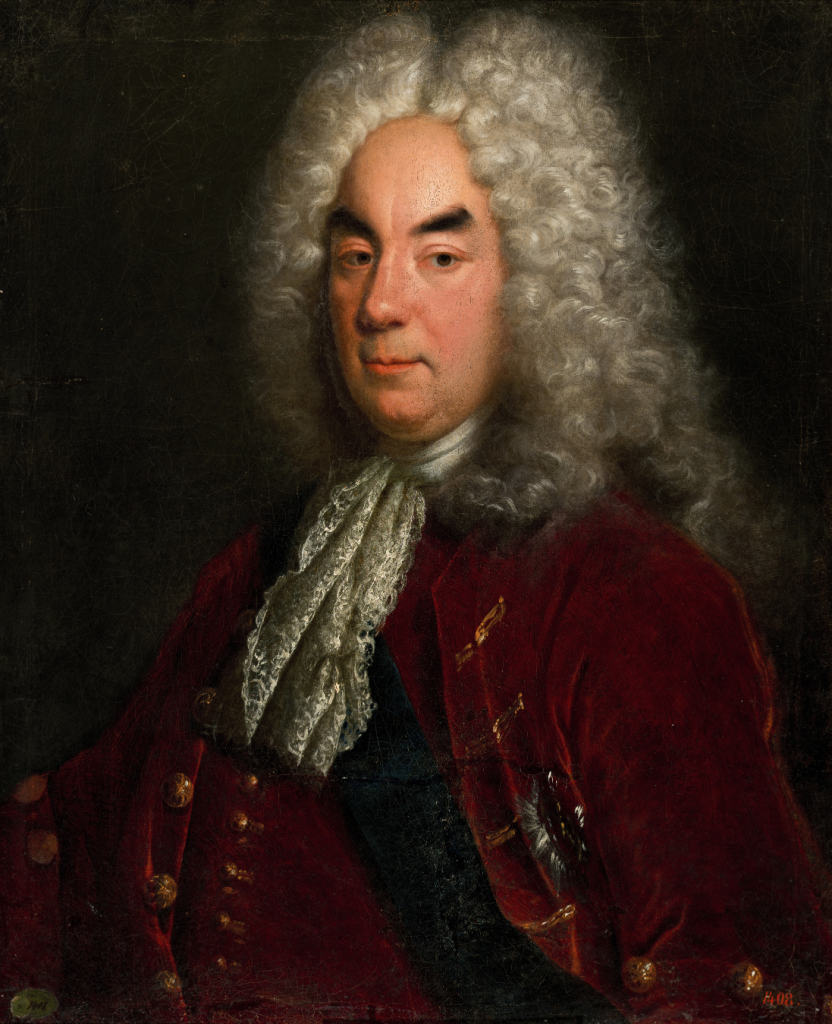


Толстой Петр Андреевич (1645 – 17 февраля 1729). Граф (1724), государственный деятель, дипломат. Сын окольничего Андрея Васильевича Толстого и Соломониды Милославской (дальней родственницы царицы Марии Ильиничны Милославской). Участвовал в Стрелецком бунте (1682), после подавления которого перешел на сторону царя Петра. В 1701–1714 посол в Константинополе. Сенатор (1714), президент Коммерц-коллегии. В 1717 склонил к возвращению в Россию царевича Алексея, скрывавшегося в Неаполе, после чего стал одним из ближайших доверенных лиц Петра I. В 1718 получил орден Св. Андрея Первозванного. Возглавлял Тайную канцелярию. В 1726 член Верховного тайного совета. В 1727 по обвинению в участии в заговоре был приговорен к смертной казни, замененной ссылкой в Соловецкий монастырь. Петр I. Время и окружение. СПб, 2015. С. 126.
Датируется по ордену Св. Андрея Первозванного, полученному П. А. Толстым в феврале 1718 года за участие в деле возвращения в Россию царевича Алексея Петровича. Как работа Г. Гзеля впервые опубликован в Каталоге-путеводителе Русского музея. (ГРМ 1948. С. 12. № 3). Ряд исследователей справедливо сопоставлял его с портретом в зеркальном отражении из музея Л. Н. Толстого (Москва), подписанным и датированным И.-Г. Таннауером (1719). (Лебедев 1938. С. 39; Коваленская 1960. С. 307–308).Проведенные исследования подтвердили технологическое сходство портретов ГРМ и музея Л. Н. Толстого. (Хилимончик 2002. С. 123). Светлана Моисеева / Петр I. Время и окружение. СПб, 2015. С. 85.
Таннауер Иоганн Готфрид
Немецкий живописец, портретист, миниатюрист.
Первоначально занимался часовым делом и музыкой. Живописи учился в Венеции у С. Бомбелли. Затем жил в Голландии, копировал Рубенса. Будучи за границей, Петр I по рекомендации художника Я. Купецкого пригласил Таннауера в Россию. 1 октября 1710 в Вене был заключен контракт о его поступлении на русскую службу в качестве живописца. В марте 1711 приехал в Смоленск, сопровождал Петра I в Прутском походе, затем поселился в Петербурге. Был придворным живописцем. Писал портреты, исторические картины, миниатюры, делал рисунки тушью, ремонтировал часы. Сын Таннауера, Иоганн Себастьян, учился гравированию при Академии наук. Среди его учеников были Еропкин, Усов и Ф. Черкасов. Неоднократно писал портреты Петра I и Екатерины I. Одной из самых известных его картин является конный портрет Петра: “Петр I в Полтавской битве”, 1725 (4?), хранящийся в Русском музее.
Pyotr Andreyevich Tolstoy (1645 – February 17, 1729). Count (1724), statesman and diplomat. Son of Okolnichy Andrei Tolstoy and Solomonida Miloslavskaya (a distant relative of Tsaritsa Maria Ilyinichna Miloslavskaya). Took part in the Streltsy Uprising (1682), but after the uprising was successfully squashed, he switched sides and defected to Peter the Great. During the years 1701–1714 he was ambassador in Constantinople. He was appointed senator (1714) and president of the College of Commerce. In 1717 he convinced Tsarevich Alexis; who was hiding in Naples, to return to Russia, which made him one of the closest confidants of Peter the Great. In 1718 he was awarded the Order of St. Andrew the Apostle the First-Called. Tolstoy was in charge of the Secret Chancellery. In 1727 he was sentenced to death for conspiracy, but instead was sent to live in the Solovetsky Monastery.
The painting was dated based on the Order of St. Andrew the Apostle the First-Called that Tolstoy received in February 1718, for his contribution to the return of Tsarevich Alexis Petrovich to Russia. The portrait was first attributed to Georg Gsell in a guidebook published by the Russian Museum. Several scholars rightfully compared the painting with a mirror portrait from the Moscow Tolstoy Museum, signed and dated by Johann Gottfried Tannauer (1719). Research conducted confirmed the existence of technical similarities between the portrait from the Russian Museum and the work from the Tolstoy Museum in Moscow.
Tannauer (Tanauer, Danhauer, Danauer) Johann Gottfried 1680, Saxony (?) – 1737(3?), St PetersburgGerman painter, portrait artist, and miniaturist. Initially, Tannauer would practice watchmaking and music. He studied painting in Venice under S. Bombelli. Subsequently, he lived in Holland, where he would copy Rubens’s paintings. When Peter the Great was abroad, he invited Tannauer to come to Russia upon the recommendation of Johannes Kupezky. On October 1, 1710 an agreement was signed in Vienna, making Tannauer a painter serving in Russia. In March 1711 the artist came to Smolensk. During the Pruth River Campaign, he accompanied Peter the Great, and then settled down in St Petersburg. He was a court artist. Tannauer painted portraits, historical pictures, and miniatures; he also created ink drawings and fixed clocks. His son, Johann Sebastian Tannauer, studied engraving at the Academy of Sciences.


